
B1 speaking — tasks, strategies, and examples
At B1, effective communication matters most. Your answer should be understandable, logical, and fluent enough for the listener to follow easily, even when small errors or a foreign accent appear.
You need to talk about familiar matters, describe people, places, and events, briefly justify an opinion, and respond in typical formal and informal situations.
The guide below covers all three exam tasks. It provides original answer structures, useful Polish phrases, exercises with new photographs, and model responses written specifically for learning.
How the oral section works
- Task 1 — describe a photograph: people, place, actions, relationships, and mood.
- Task 2 — deliver an organized monologue on the given topic.
- Task 3 — speak with the examiner in a defined role and situation.
- Use the preparation time for a short outline, but do not write complete sentences or a full dialogue.
What you demonstrate to the examiners
- Task completion: you stay on topic and cover every required point.
- Coherence and fluency: you connect sentences, keep a natural pace, and develop more than one sentence.
- Appropriate register: you distinguish a conversation with a friend from one with an office, hotel, or school employee.
- Understandable pronunciation and intonation, plus strategies for a missing word or an unclear question.
B1 · practical guide
Three oral tasks — from an outline to an independent answer
Choose a task, learn a safe structure, and only then open an exercise. Model answers stay hidden so that you can record your own version first. The practice photographs and example texts do not come from the official exam guide.
The exam in three steps
Each task checks something different. The common rule is simple: identify the purpose, make a short keyword outline, and speak in complete sentences.
- 1
Image description
Organize what you see, moving from the overall scene through details to the mood or a careful assumption.
- 2
Monologue
Develop the topic independently, connect consecutive points, and finish with a brief conclusion or opinion.
- 3
Communicative situation
Respond to the other person, ask questions, explain, and pursue your goal in the right register.
Task 1
Image description
Do not list random objects. Build a short story of the image: introduce the scene, organize details spatially, describe actions, and finish with the atmosphere or a cautious assumption.
Goal: a coherent description of people, place, and actions.
What to focus on
- Say how many people are visible, what they look like and wear, and how they may feel.
- Identify the place and positions: foreground, background, centre, left, and right.
- Describe actions in the present tense: siedzi, rozmawiają, przygotowuje, fotografuje.
- Separate facts from assumptions with words such as „chyba”, „prawdopodobnie”, and „wydaje mi się”.
- Finish with one sentence about the mood, weather, or overall impression.
Safe answer outline
- 1Overall image: Name the place, number of people, and main event in one sentence.
- 2Foreground: Describe the main people, their appearance, clothing, and action.
- 3Surroundings: Move to the background, objects, colours, time of day, or weather.
- 4Interpretation: Add a relationship, mood, or careful conclusion.
Useful Polish phrases
Opening
- „Na fotografii widzę…”
- „Zdjęcie przedstawia sytuację, w której…”
- „To prawdopodobnie scena z…”
Spatial order
- „Na pierwszym planie znajduje się…”
- „W głębi, po lewej stronie, można zauważyć…”
- „Tuż obok / za nią / naprzeciwko widać…”
Conclusion and mood
- „Sądząc po ich minach, chyba…”
- „Cała scena sprawia wrażenie…”
- „Możliwe, że chwilę wcześniej…”
Exercises and original examples
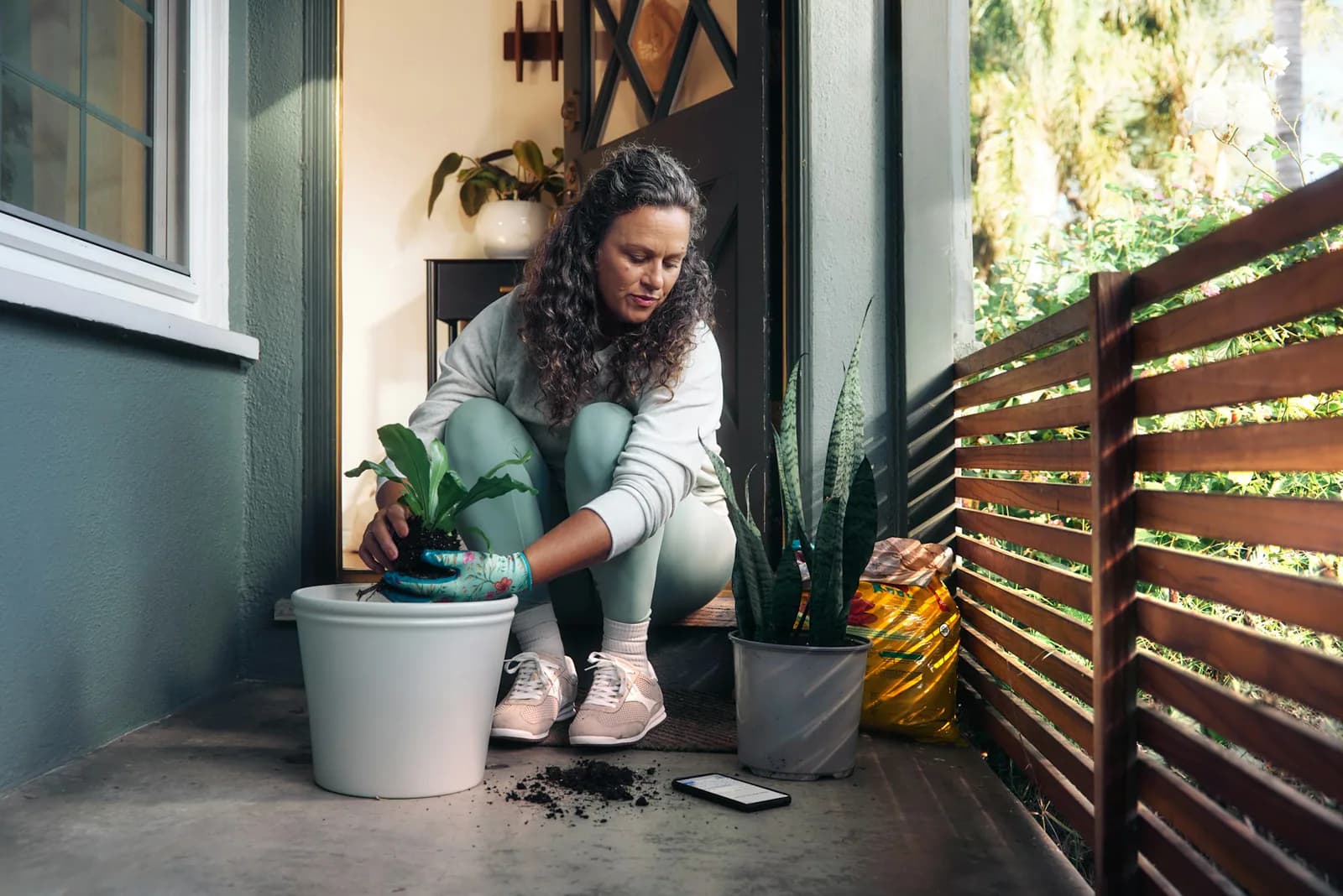
13 ex.Z odpowiedziąDomowe ogrodnictwoOpen exercise
Task
Opisz fotografię. Powiedz, gdzie znajduje się kobieta, co robi i jaki nastrój ma ta scena.
Guiding questions
- Jak wygląda kobieta i w co jest ubrana?
- Jakie przedmioty oraz rośliny znajdują się wokół niej?
- Co można powiedzieć o porze dnia i atmosferze?
Keyword outline
- 1Balkon przy domu, jedna osoba, słoneczny dzień.
- 2Przesadzanie rośliny, donice, ziemia, rękawiczki i telefon.
- 3Spokojna praca, zainteresowanie ogrodnictwem, przyjemny nastrój.
Show the model answer
Na fotografii widzę kobietę, która zajmuje się roślinami na niewielkim balkonie przy domu. Jest ubrana sportowo: ma jasną bluzę, zielone spodnie i wygodne buty. Na rękach ma kolorowe rękawiczki ogrodnicze.
Kobieta kuca obok dużej białej donicy i przesadza do niej zieloną roślinę. Wokół leży trochę ziemi. Po prawej stronie stoją jeszcze dwie doniczki, a za nimi znajduje się worek z ziemią. Na podłodze widać również telefon.
Jest jasno i słonecznie. Kobieta wygląda na skupioną, ale spokojną. Wydaje mi się, że ogrodnictwo jest jej hobby i że wykorzystuje wolny dzień, żeby uporządkować balkon.
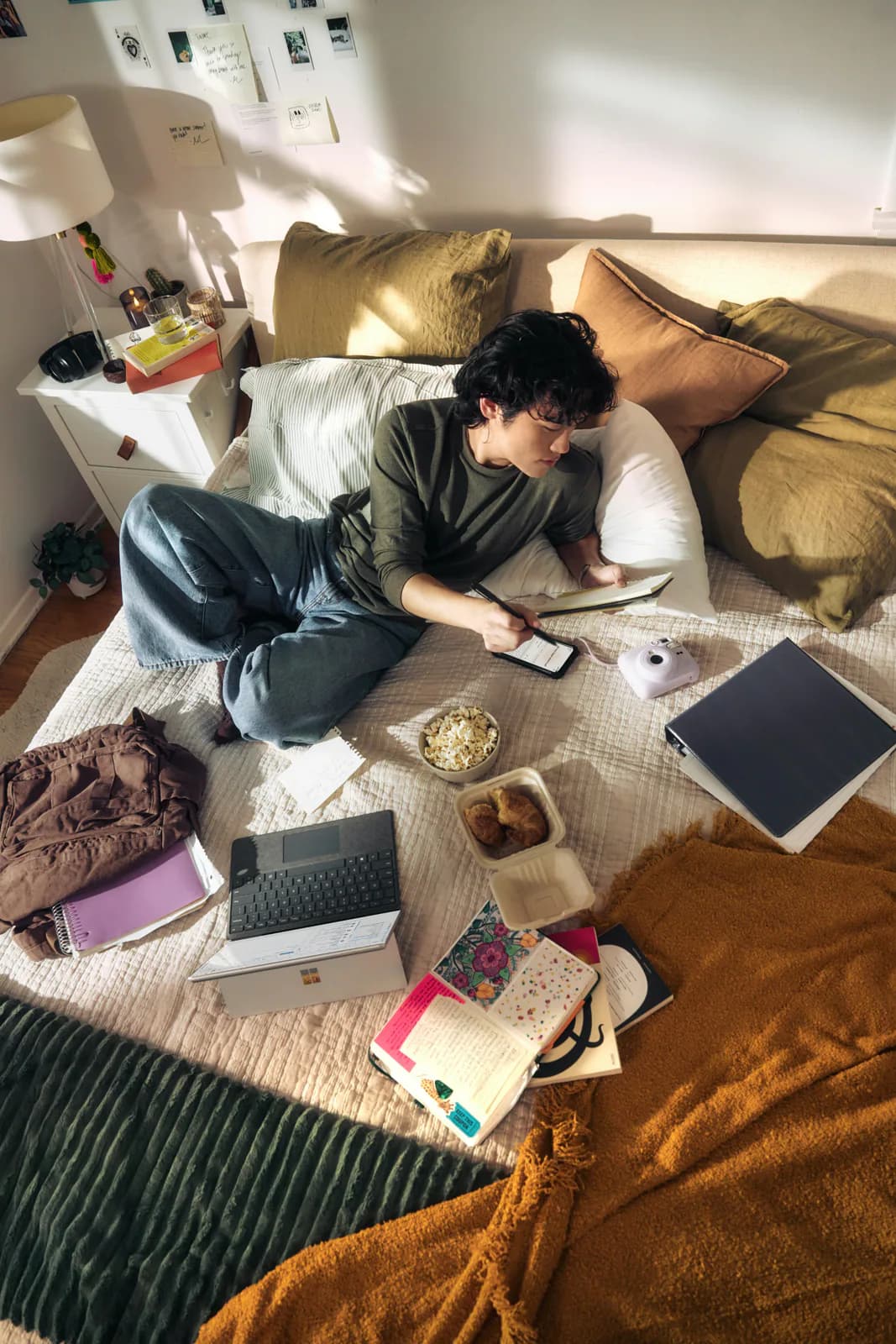
Z odpowiedziąNauka w nieformalnym miejscuOpen exercise
Task
Opisz zdjęcie, zwracając uwagę na osobę, otoczenie i sposób nauki.
Guiding questions
- Co robi osoba i jakich przedmiotów używa?
- Jak jest urządzone pomieszczenie?
- Czy to wygodny sposób pracy? Uzasadnij krótko swoją opinię.
Keyword outline
- 1Sypialnia, jedna młoda osoba, popołudniowe światło.
- 2Notatnik, telefon, laptop, książki i przekąski rozłożone na łóżku.
- 3Intensywna nauka, twórczy nieporządek, możliwe przygotowanie do projektu.
Show the model answer
Zdjęcie przedstawia młodą osobę, która uczy się w sypialni. Siedzi po turecku na łóżku i czyta notatki. Ma na sobie ciemną bluzkę oraz szerokie dżinsy.
Na łóżku znajduje się bardzo dużo rzeczy: otwarty laptop, kilka książek i zeszytów, telefon, mały aparat oraz jedzenie. Z lewej strony leży plecak. Przez okno wpada ciepłe światło, dlatego przypuszczam, że jest późne popołudnie.
Osoba wygląda na skupioną. Prawdopodobnie przygotowuje się do zajęć albo kończy projekt. Taki sposób pracy może być wygodny, ale moim zdaniem biurko pomogłoby jej lepiej uporządkować materiały.
Z odpowiedziąSpotkanie przyjaciółekOpen exercise

Task
Opisz osoby, ich prawdopodobną relację i sytuację przedstawioną na zdjęciu.
Guiding questions
- Ile osób widać i gdzie się znajdują?
- Co robi kobieta po lewej stronie?
- Po czym można rozpoznać nastrój spotkania?
Keyword outline
- 1Cztery osoby przy stoliku na zewnątrz, nowoczesne budynki w tle.
- 2Wspólne zdjęcie telefonem, bliskość, uśmiechy i swobodne ubrania.
- 3Przyjacielska relacja, spotkanie po zajęciach albo w czasie wolnym.
Show the model answer
Na pierwszym planie widzę cztery młode kobiety, które siedzą razem przy okrągłym stoliku na zewnątrz. Kobieta po lewej stronie wyciąga telefon i robi całej grupie zdjęcie. Pozostałe osoby patrzą w stronę aparatu.
Wszystkie kobiety są uśmiechnięte i siedzą bardzo blisko siebie. Jedna z nich obejmuje koleżankę, dlatego sądzę, że dobrze się znają. Mają różne, raczej swobodne stroje. W tle znajdują się nowoczesne budynki oraz drzewa.
Atmosfera jest pogodna i przyjacielska. Być może spotkały się po zajęciach albo świętują ważne wydarzenie. Zdjęcie kojarzy mi się z odpoczynkiem i wspólnie spędzanym czasem.
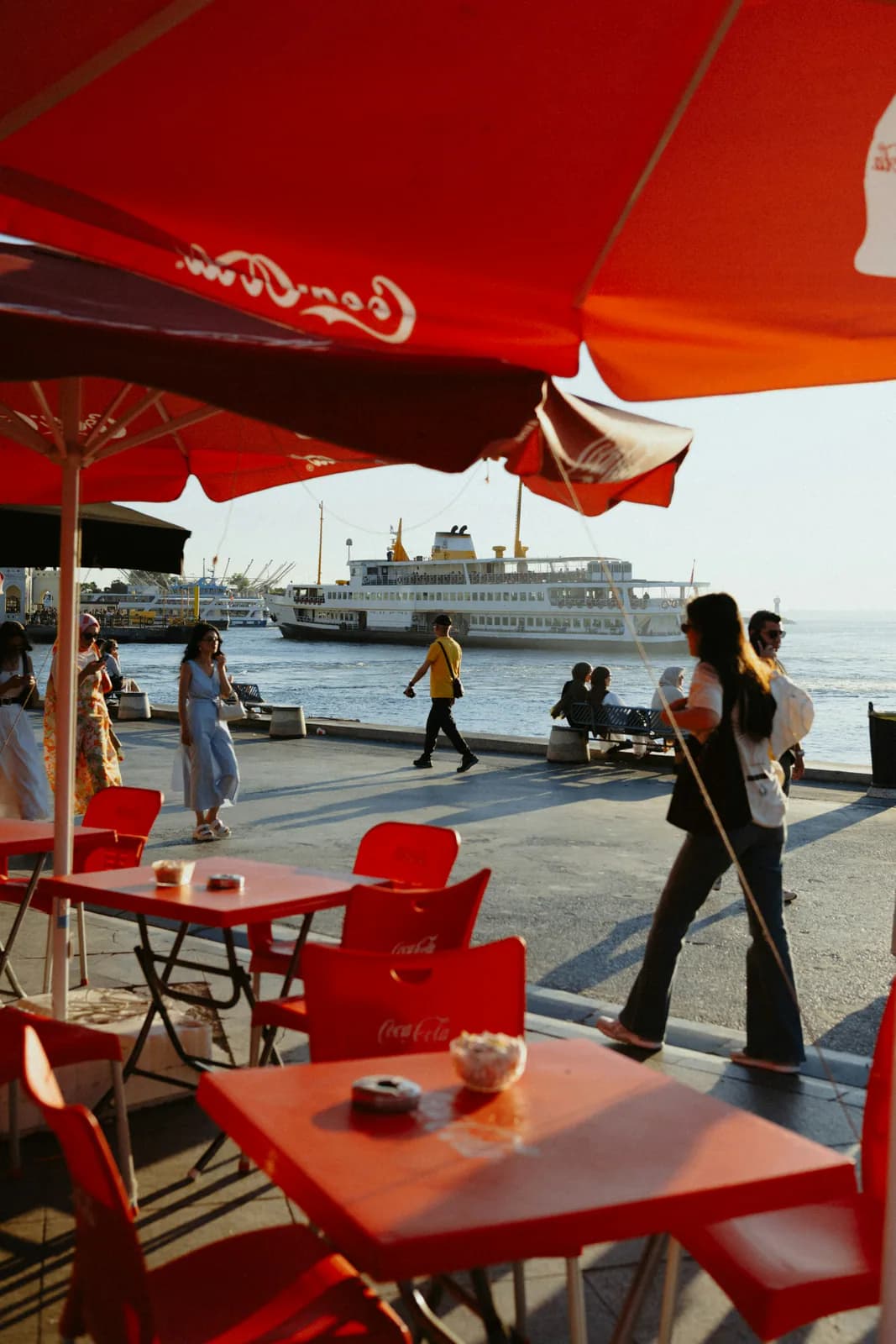
Z odpowiedziąPopołudnie w porcieOpen exercise
Task
Opisz miejsce, osoby i pogodę. Zwróć uwagę na pierwszy plan oraz tło.
Guiding questions
- Jakie kolory dominują na pierwszym planie?
- Co robią ludzie na promenadzie?
- Jaki środek transportu widać w głębi?
Keyword outline
- 1Kawiarnia przy promenadzie, czerwone parasole i stoliki.
- 2Spacerujący ludzie, ławki, spokojna woda i duży prom.
- 3Ciepłe popołudnie, wakacyjny ruch, miejska atmosfera.
Show the model answer
Fotografia została zrobiona w nadmorskim mieście. Na pierwszym planie znajdują się czerwone stoliki, krzesła i duże parasole należące do kawiarni. Nie ma przy nich gości, ale na promenadzie spaceruje kilka osób.
Pośrodku widzę mężczyznę w żółtej koszulce, a po prawej stronie przechodzi kobieta z torbą. Niektórzy siedzą na ławce i patrzą na wodę. W głębi płynie duży biały prom, a dalej widać portowe urządzenia.
Jest słonecznie i prawdopodobnie dość ciepło. Długie cienie wskazują na późne popołudnie. Miejsce wydaje się ruchliwe, ale jednocześnie ma wakacyjny, przyjemny charakter.
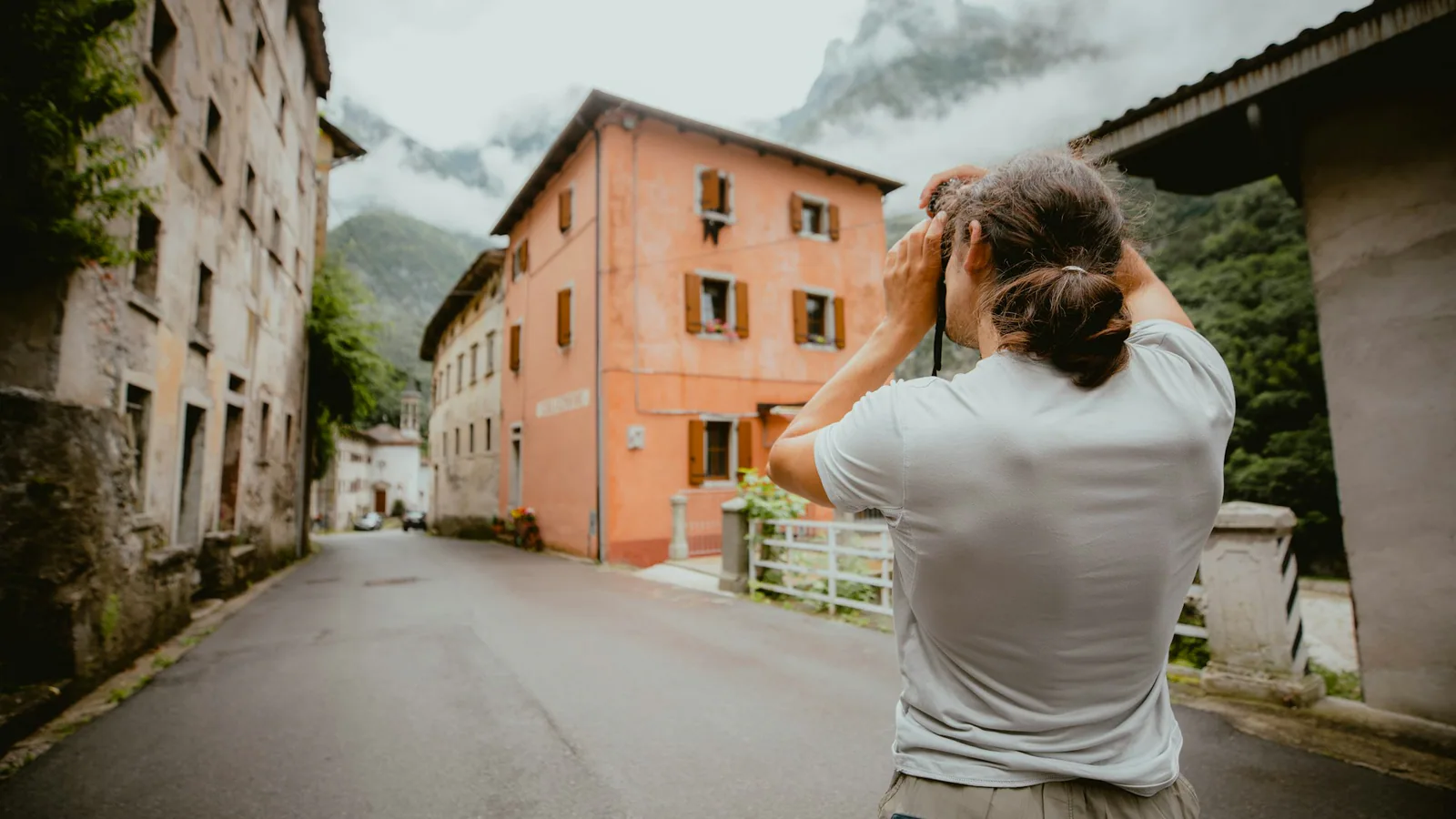
Ćwiczenie samodzielneFotograf w górskim miasteczkuOpen exercise
Task
Nagraj opis trwający około minuty. Uporządkuj przestrzeń od mężczyzny na pierwszym planie po góry w tle.
Guiding questions
- Co robi mężczyzna?
- Jak wyglądają budynki i ulica?
- Jaka może być pogoda i cel wizyty?
Keyword outline
- 1Turysta z aparatem.
- 2Wąska ulica i stare domy.
- 3Chmury między górami; wyjazd krajoznawczy.
Ćwiczenie samodzielneSpacer w południowym miasteczkuOpen exercise
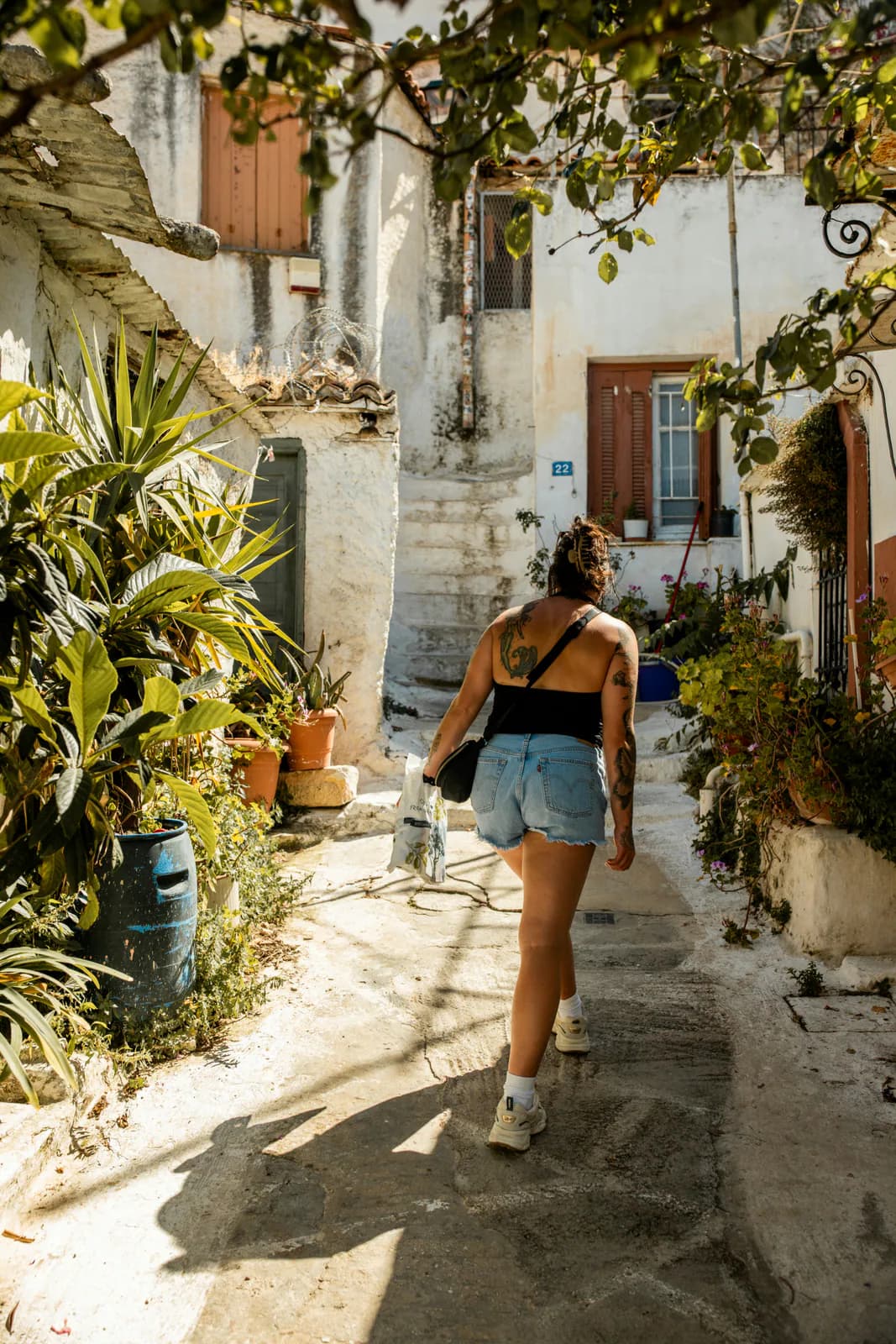
Task
Opisz scenę, używając co najmniej pięciu określeń miejsca i położenia.
Guiding questions
- Jak wygląda alejka?
- Co niesie kobieta?
- Jaki klimat ma to miejsce?
Keyword outline
- 1Wąskie przejście i białe ściany.
- 2Jedna osoba idzie w stronę domu.
- 3Dużo zieleni, słońce i spokojny nastrój.
Ćwiczenie samodzielneOdpoczynek na wodzieOpen exercise
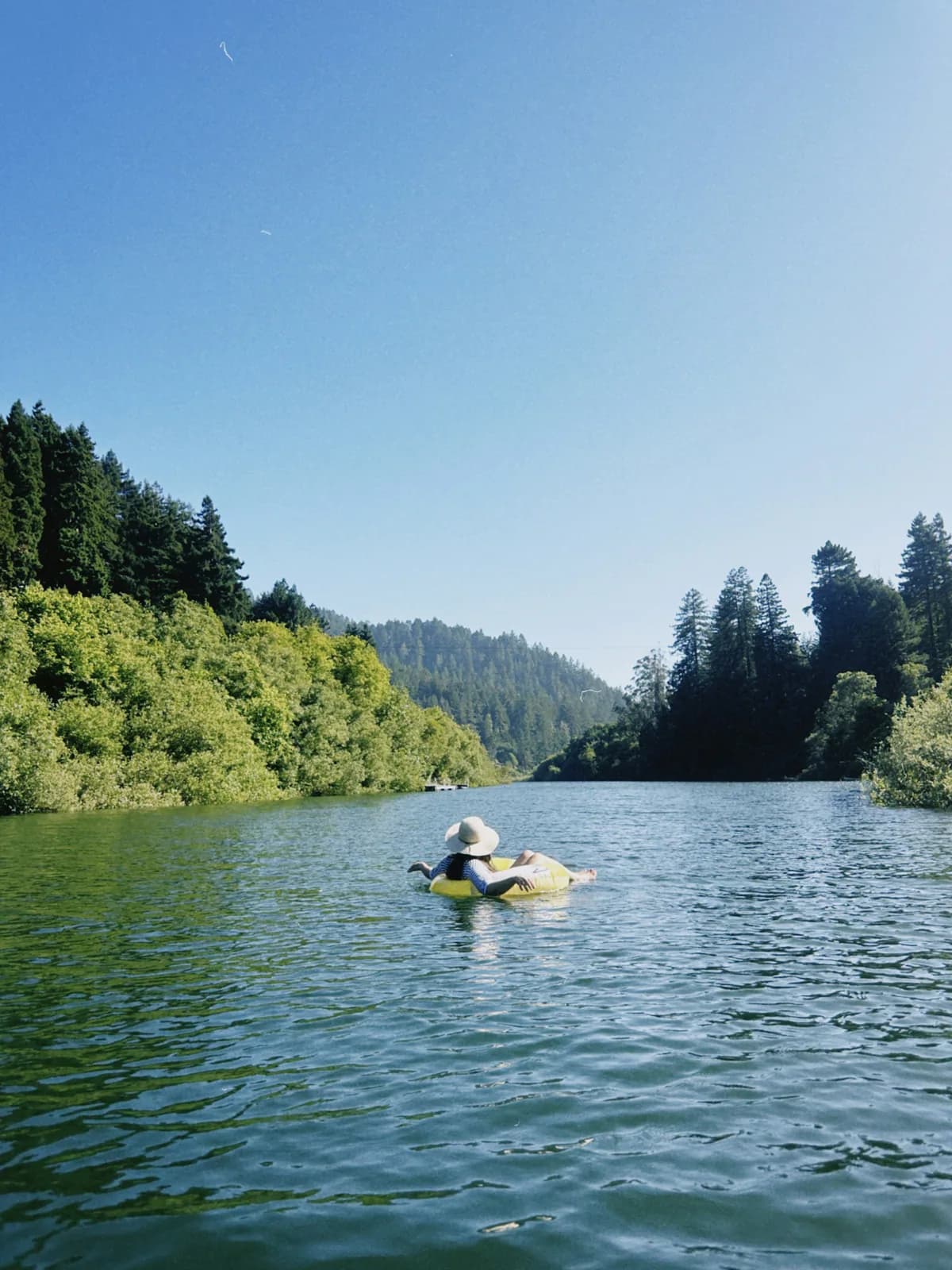
Task
Opisz krajobraz i osobę, a następnie powiedz, jakie emocje wywołuje zdjęcie.
Guiding questions
- Gdzie znajduje się osoba?
- Co widać na brzegach?
- Dlaczego scena wygląda spokojnie?
Keyword outline
- 1Rzeka lub jezioro, las i błękitne niebo.
- 2Jedna osoba na dmuchanym kole.
- 3Lato, cisza i odpoczynek.
Ćwiczenie samodzielneJasny pokój z kominkiemOpen exercise
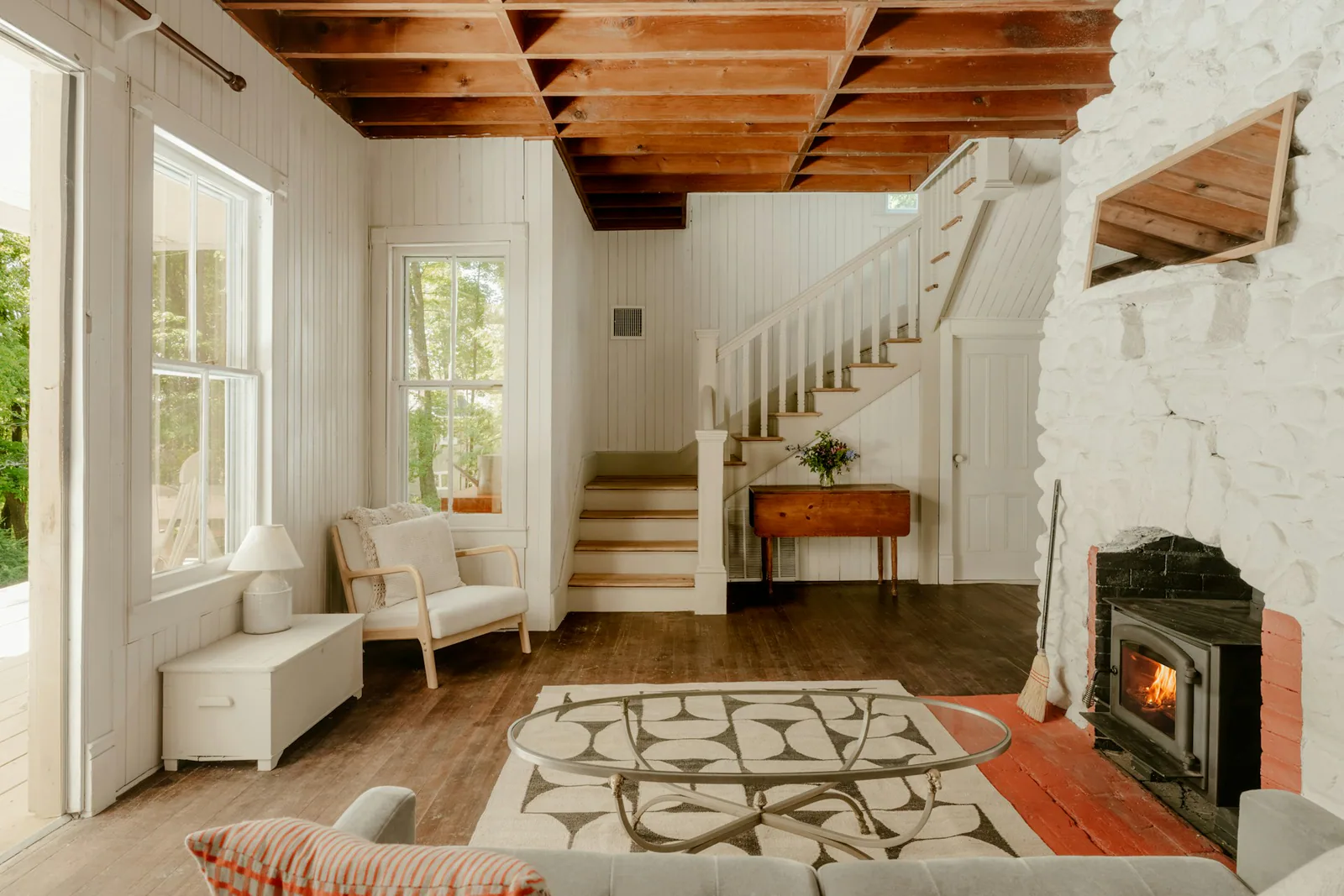
Task
Opisz pomieszczenie od lewej do prawej strony i oceń, czy wygląda przytulnie.
Guiding questions
- Jakie meble widać?
- Z jakich materiałów wykonano wnętrze?
- Co przyciąga uwagę po prawej stronie?
Keyword outline
- 1Duże okna, fotel i lampa.
- 2Drewniane schody, podłoga i strop.
- 3Kamienny kominek, ogień i ciepła atmosfera.
Ćwiczenie samodzielneNowoczesna kuchniaOpen exercise
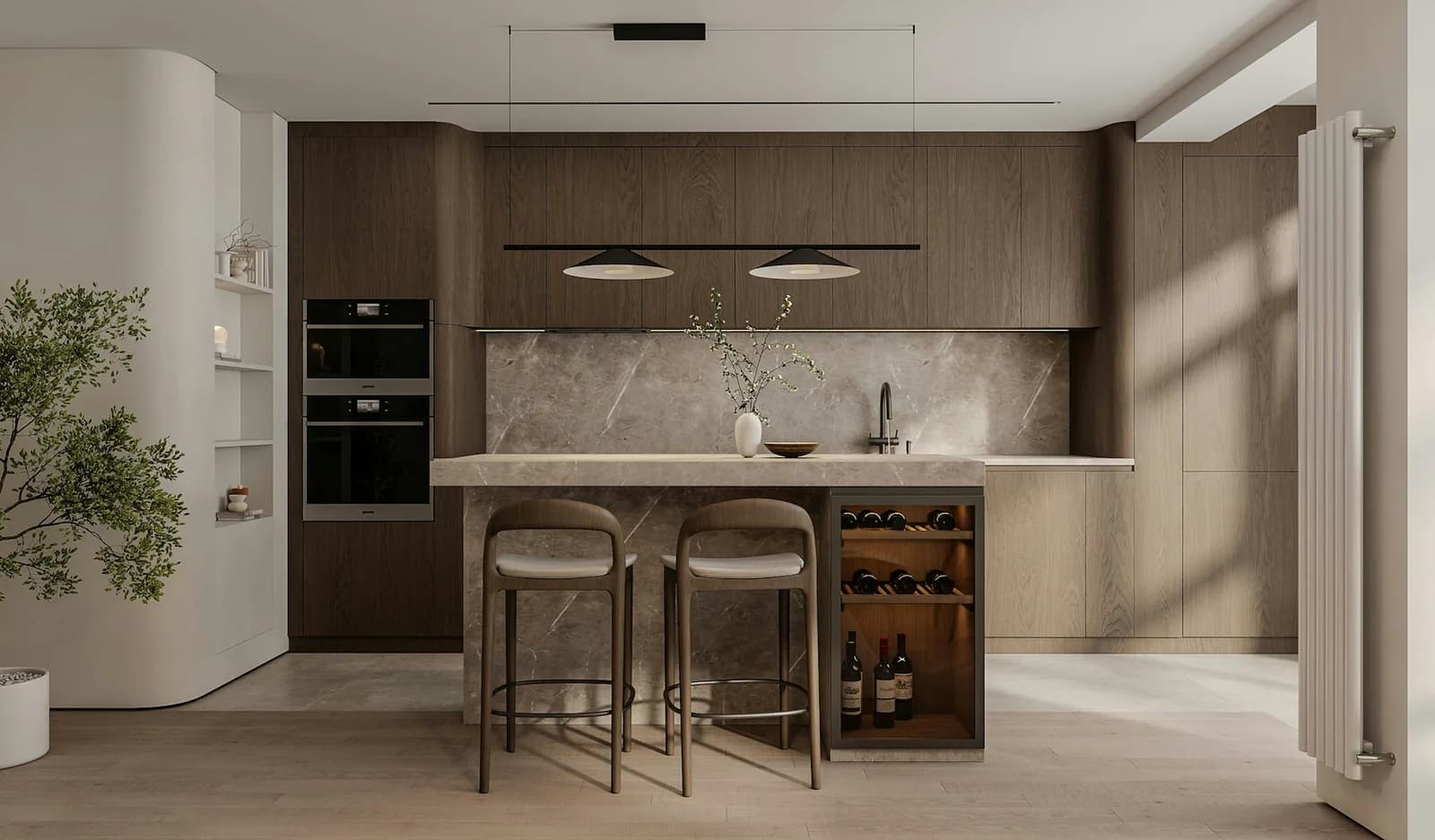
Task
Przedstaw mieszkanie koledze, który szuka lokum do wynajęcia. Opisz zalety widocznej kuchni.
Guiding questions
- Jakie wyposażenie ma kuchnia?
- Jakie kolory i materiały dominują?
- Dla kogo to wnętrze może być wygodne?
Keyword outline
- 1Duże, nowoczesne i uporządkowane wnętrze.
- 2Wyspa, dwa krzesła, piekarniki i dużo szafek.
- 3Wysoki standard; dobre dla pary lub osoby pracującej z domu.
Ćwiczenie samodzielneRozmowa podczas naukiOpen exercise

Task
Opisz miejsce pracy i spróbuj wyjaśnić, dlaczego osoba mówi do telefonu.
Guiding questions
- Co leży na biurku?
- Jak wygląda ściana nad blatem?
- Czy osoba uczy się sama?
Keyword outline
- 1Domowe biuro przy oknie.
- 2Laptop, notatki, telefon i materiały na ścianie.
- 3Nagrywanie wiadomości lub konsultacja projektu.
Ćwiczenie samodzielnePrzerwa w pracy zdalnejOpen exercise

Task
Opisz fotografię i przedstaw plusy albo minusy pracy w takim miejscu.
Guiding questions
- Z jakich urządzeń korzysta kobieta?
- Co wskazuje na przerwę?
- Jakie jest oświetlenie pomieszczenia?
Keyword outline
- 1Domowy gabinet, jedna osoba.
- 2Tablet z wykresem, telefon, kubek i notatki.
- 3Krótka przerwa; wygoda, ale możliwe rozproszenie.
Ćwiczenie samodzielnePrzygotowanie posiłkuOpen exercise
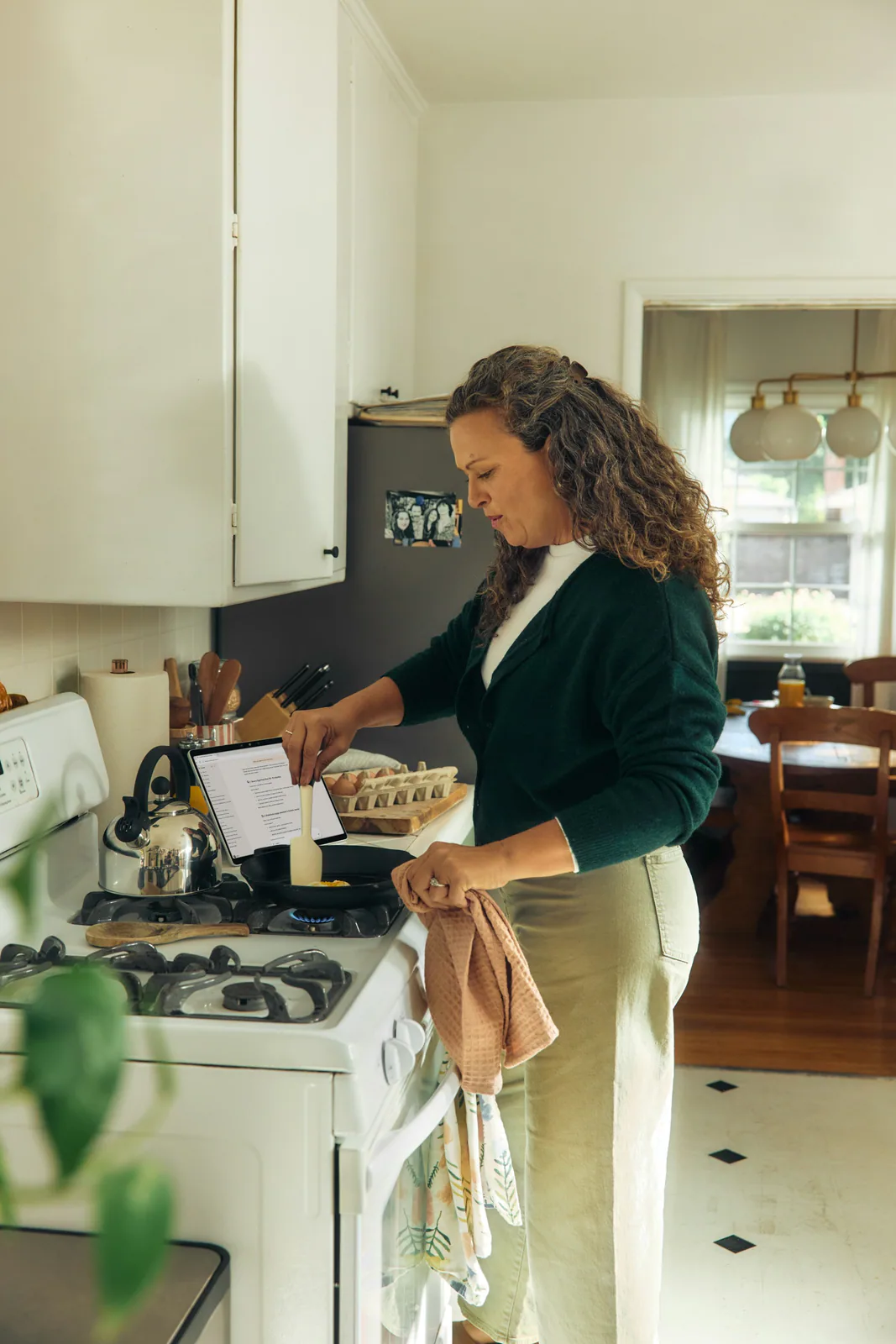
Task
Opisz czynność krok po kroku i powiedz, w jaki sposób technologia pomaga kobiecie.
Guiding questions
- Co robi kobieta?
- Jakie przedmioty stoją przy kuchence?
- Z czego może korzystać na tablecie?
Keyword outline
- 1Domowa kuchnia i jedna osoba.
- 2Patelnia, jajka, czajnik, ręcznik i tablet.
- 3Przepis internetowy; zwykły poranek.
Ćwiczenie samodzielneKreatywna sesja zdjęciowaOpen exercise

Task
Opisz nietypową sytuację i spróbuj określić cel użycia czerwonej folii.
Guiding questions
- Ile osób bierze udział w scenie?
- Jakie urządzenie widać?
- Jaki efekt może powstać na zdjęciu?
Keyword outline
- 1Studio lub zwykły pokój.
- 2Model, fotografka, aparat i czerwona folia.
- 3Eksperyment artystyczny, energia i kreatywność.
Task 2
Monologue on a given topic
A monologue is an independent, continuous response. It needs a clear opening, several logically connected parts, and a short ending. The aim is not difficult vocabulary but developing the topic and showing your perspective.
Goal: develop the topic and connect ideas logically.
What to focus on
- Open by introducing the topic instead of jumping to a random detail.
- Develop at least two or three aspects: description, example, experience, cause, or effect.
- When giving an opinion, add a short reason or specific example.
- Use connectors to show order, contrast, addition, and conclusion.
- Finish with a summary; do not stop with „to wszystko”.
Safe answer outline
- 1Thesis or preview: Name the topic and say which two or three elements you will discuss.
- 2Development: Present facts or a description, then add experience and an example.
- 3Your view: State your opinion and support it with a simple argument.
- 4Conclusion: Summarize the main point in one or two sentences.
Useful Polish phrases
Organizing
- „Na początku chciałbym opowiedzieć o…”
- „Pierwsza ważna sprawa to…”
- „Kolejnym przykładem może być…”
Opinion and argument
- „Moim zdaniem…, ponieważ…”
- „Z jednej strony…, ale z drugiej…”
- „Najlepiej widać to na przykładzie…”
Ending
- „Podsumowując, najważniejsze jest…”
- „Dlatego uważam, że…”
- „Na koniec chciałbym dodać, że…”
Exercises and original examples
3 ex.Autorski przykładDzień bez telefonuOpen exercise
Task
Opowiedz o dniu, w którym celowo nie korzystałeś albo nie korzystałaś z telefonu. Powiedz, dlaczego podjąłeś tę decyzję, co robiłeś i czego się nauczyłeś.
Keyword outline
- 1Powód: zmęczenie powiadomieniami i potrzeba odpoczynku.
- 2Przebieg: spacer, gotowanie, spotkanie i czytanie.
- 3Wniosek: telefon jest pomocny, ale warto ustalać granice.
Show the model answer
Chciałbym opowiedzieć o sobocie, podczas której prawie w ogóle nie używałem telefonu. W tygodniu dostaję dużo wiadomości, dlatego chciałem odpocząć od ekranu i sprawdzić, czy potrafię inaczej zaplanować dzień.
Rano zostawiłem telefon w szufladzie i poszedłem na długi spacer. Później ugotowałem obiad z przepisu zapisanego w starym zeszycie. Po południu odwiedził mnie kolega. Zwykle pokazujemy sobie filmy w internecie, ale tym razem długo rozmawialiśmy i graliśmy w karty.
Na początku kilka razy odruchowo szukałem telefonu. Potem poczułem jednak większy spokój i miałem wrażenie, że dzień trwa dłużej. Moim zdaniem telefon bardzo ułatwia życie, ale dobrze jest czasem świadomie go odłożyć. Dlatego chcę powtarzać taki dzień raz w miesiącu.
Autorski przykładMiejsce w okolicy warte odwiedzeniaOpen exercise
Task
Poleć gościowi jedno miejsce w swojej okolicy. Opisz je, wyjaśnij, jak tam dotrzeć i powiedz, dlaczego warto je zobaczyć.
Keyword outline
- 1Stary park nad rzeką, blisko centrum.
- 2Dojazd tramwajem i krótki spacer.
- 3Alejki, mała kawiarnia, widok na wodę i bezpłatne koncerty latem.
Show the model answer
Osobie, która pierwszy raz przyjeżdża do mojego miasta, poleciłabym stary park nad rzeką. Znajduje się niedaleko centrum, ale jest tam znacznie ciszej niż przy głównym rynku.
Najłatwiej dojechać tramwajem numer siedem, wysiąść przy bibliotece i iść około dziesięciu minut w stronę mostu. W parku są szerokie alejki, dużo wysokich drzew oraz mała kawiarnia. Można też usiąść blisko wody i obserwować łodzie. Latem w niedzielne popołudnia odbywają się tam bezpłatne koncerty.
Lubię to miejsce, ponieważ nadaje się zarówno na aktywny spacer, jak i na spokojne spotkanie z przyjaciółmi. Podsumowując, park pokazuje inną, bardziej zieloną stronę miasta i warto zarezerwować na niego przynajmniej dwie godziny.
Autorski przykładNauka w domu czy w bibliotece?Open exercise
Task
Porównaj naukę w domu i w bibliotece. Wskaż zalety obu rozwiązań, opowiedz o swoim doświadczeniu i przedstaw własne zdanie.
Keyword outline
- 1Dom: wygoda, własne materiały, ale więcej rozproszeń.
- 2Biblioteka: cisza, porządek, dojazd i godziny otwarcia.
- 3Własny wybór zależny od zadania; trudne rzeczy w bibliotece.
Show the model answer
Nauka w domu i w bibliotece ma różne zalety. W domu można zacząć pracę o dowolnej porze, zrobić herbatę i mieć wszystkie materiały pod ręką. Problemem są jednak telewizor, obowiązki domowe i częste przerwy.
W bibliotece łatwiej mi się skoncentrować, ponieważ inni ludzie również pracują w ciszy. Mam tam duży stół i dostęp do książek. Z drugiej strony muszę poświęcić czas na dojazd i pamiętać o godzinach otwarcia.
Z własnego doświadczenia wiem, że krótkie zadania dobrze wykonuję w domu. Kiedy przygotowuję się do ważnego egzaminu, wybieram bibliotekę. Moim zdaniem nie trzeba decydować się tylko na jedno miejsce — najlepsze rozwiązanie zależy od rodzaju pracy.
Task 3
Communicative situation
This conversation develops live. The prompt defines your role, interlocutor, goal, and usually several matters to resolve. Respond actively: listen, ask follow-up questions, and suggest a solution instead of delivering a prepared monologue.
Goal: achieve the result in the appropriate register.
What to focus on
- Identify who you are, whom you are speaking to, and whether the situation requires Pan/Pani forms.
- Open the conversation, state its purpose clearly, and cover every prompt point.
- Ask open or detailed questions and respond to new information.
- When suggesting or disagreeing, give a reason and offer an alternative.
- Finish by summarizing the arrangement and using a suitable goodbye.
Safe answer outline
- 1Role and register: Decide whether you speak as a customer, neighbour, employee, student, or friend.
- 2Purpose: In the first sentences, say why you are calling or what you need.
- 3Exchange: Ask, answer, argue, and refer to the examiner’s words.
- 4Agreement: Confirm the date, price, decision, or next step and say goodbye.
Useful Polish phrases
Opening and purpose
- „Dzień dobry, dzwonię w sprawie…”
- „Czy mogę zająć chwilę?”
- „Chciałbym zapytać o…”
Response and negotiation
- „Rozumiem, w takim razie może…”
- „To rozwiązanie mi odpowiada, pod warunkiem że…”
- „A czy byłaby możliwość…?”
Confirmation and close
- „Czy dobrze rozumiem, że…?”
- „W takim razie jesteśmy umówieni na…”
- „Dziękuję za pomoc. Do widzenia.”
Exercises and original examples
3 ex.Nieoficjalnie · perswazjaWeekend w ogrodzie społecznymOpen exercise
Task
Twój kolega uważa, że sobotę najlepiej spędzić przed telewizorem. Przekonaj go, aby pomógł ci podczas otwarcia ogrodu społecznego. Wyjaśnij, co będziecie robić, odpowiedz na jego obawy i uzgodnij szczegóły.
Keyword outline
- 1Cel: wspólny udział od 10.00 do 14.00.
- 2Argumenty: ruch, nowi ludzie, jedzenie po pracy i konkretna pomoc sąsiadom.
- 3Reakcja na obawę: nie trzeba znać się na ogrodnictwie; organizator zapewnia narzędzia.
Show the model answer
Ty: Cześć, masz już plany na sobotę? Kolega: Chcę odpocząć. Cały tydzień byłem zajęty. Ty: Rozumiem, ale może poszedłbyś ze mną na otwarcie ogrodu społecznego? Potrzebują ludzi do sadzenia ziół i ustawiania ławek. Kolega: Ja zupełnie nie znam się na roślinach. Pewnie tylko będę przeszkadzał. Ty: Wcale nie. Organizatorzy wszystko pokażą i zapewniają narzędzia. Możesz pomóc przy ławkach, jeśli nie chcesz sadzić.
Kolega: A ile to potrwa? Nie chcę stracić całego dnia. Ty: Zaczynamy o dziesiątej i kończymy około drugiej. Potem będzie wspólny obiad. Poznasz sąsiadów, trochę się poruszasz i nadal będziesz miał wolny wieczór. Kolega: To brzmi lepiej. Jak tam dojedziemy? Ty: Spotkajmy się o wpół do dziesiątej przy przystanku. Pojedziemy razem rowerami. Kolega: Dobrze, przekonałeś mnie. Ty: Świetnie, napiszę organizatorce, że będą dwie osoby.
Oficjalnie · rozmowa telefonicznaRezerwacja pobytu z roweramiOpen exercise
Task
Zadzwoń do pensjonatu i zarezerwuj pokój dla dwóch osób na cztery noce. Zapytaj o śniadanie, bezpieczne miejsce na rowery, koszt pobytu oraz możliwość bezpłatnego odwołania rezerwacji.
Keyword outline
- 1Termin i liczba osób: 12–16 września, dwie osoby.
- 2Warunki: pokój z łazienką, śniadanie, przechowalnia rowerów.
- 3Cena, anulowanie i potwierdzenie e-mailem.
Show the model answer
Recepcja: Pensjonat Zielony Szlak, słucham. Ty: Dzień dobry. Chciałabym zapytać o wolny pokój dla dwóch osób od dwunastego do szesnastego września. Recepcja: Tak, mamy pokój dwuosobowy z łazienką. Ty: Świetnie. Jaka jest cena za cztery noce i czy śniadanie jest wliczone? Recepcja: Pobyt kosztuje tysiąc dwieście złotych. Śniadanie jest w cenie.
Ty: Planujemy przyjechać rowerami. Czy mają Państwo zamykaną przechowalnię? Recepcja: Tak, goście mogą z niej korzystać bez opłaty. Ty: A do kiedy można bezpłatnie odwołać rezerwację? Recepcja: Najpóźniej siedem dni przed przyjazdem. Ty: Rozumiem. W takim razie proszę zarezerwować pokój na nazwisko Marta Lis. Czy mogą Państwo wysłać potwierdzenie e-mailem? Recepcja: Oczywiście. Ty: Dziękuję bardzo za informacje. Do widzenia.
Oficjalnie · prośba i rozwiązanieZmiana terminu zajęćOpen exercise
Task
Uczestniczysz w kursie fotografii, ale nowe godziny kolidują z twoją pracą. Porozmawiaj z pracownikiem centrum kultury, wyjaśnij problem, zapytaj o inne grupy i uzgodnij rozwiązanie.
Keyword outline
- 1Problem: od przyszłego tygodnia praca do 18.00, kurs zaczyna się o 17.30.
- 2Pytania: grupa sobotnia lub późniejsza, dopłata i ten sam poziom.
- 3Ustalenie: dwie soboty próbne i potwierdzenie wiadomością.
Show the model answer
Ty: Dzień dobry, czy mogę porozmawiać o kursie fotografii dla początkujących? Pracownik: Oczywiście. W czym mogę pomóc? Ty: Od przyszłego tygodnia będę pracować do osiemnastej, a moje zajęcia zaczynają się o siedemnastej trzydzieści. Nie chciałabym rezygnować. Czy jest grupa w innym terminie? Pracownik: Mamy grupę sobotnią, ale jest już dość liczna. Ty: Rozumiem. A czy mogłabym przyjść na jedne zajęcia próbne i sprawdzić, czy prowadzący się zgodzi?
Pracownik: Mogę zaproponować dwie soboty. Później zdecydujemy, czy zmiana będzie stała. Ty: To bardzo dobre rozwiązanie. Czy program jest na tym samym poziomie i czy trzeba dopłacić? Pracownik: Poziom jest ten sam, a dopłata nie będzie potrzebna. Ty: Czyli w najbliższe dwie soboty przychodzę na godzinę dziesiątą, tak? Pracownik: Tak. Wyślę jeszcze potwierdzenie. Ty: Dziękuję za pomoc. Do widzenia.
Formal and informal register
Register is part of the task. In a formal conversation, use Pan/Pani/Państwo, complete requests, and calm responses. With someone close, you can speak more briefly and directly.
Greeting and goodbye
Formal
- „Dzień dobry. / Dobry wieczór.”
- „Dziękuję za rozmowę. Do widzenia.”
Informal
- „Cześć! / Hej!”
- „Dzięki, do zobaczenia! / Na razie!”
Introducing yourself or someone else
Formal
- „Pozwolę sobie przedstawić: Anna Maj.”
- „Chciałbym przedstawić Państwu mojego współpracownika.”
Informal
- „Jestem Ania.”
- „Poznajcie się, to mój kolega Marek.”
Asking for information
Formal
- „Czy może mi Pan powiedzieć, o której…?”
- „Chciałabym dowiedzieć się, czy…”
Informal
- „Wiesz może, o której…?”
- „Powiedz, czy…”
Suggestion and response
Formal
- „Czy odpowiadałby Państwu inny termin?”
- „To dobre rozwiązanie. / Niestety ten termin mi nie odpowiada.”
Informal
- „Może pójdziemy tam jutro?”
- „Jasne, dobry pomysł! / Wolę coś innego.”
Apology and dissatisfaction
Formal
- „Przepraszam za opóźnienie.”
- „Niestety nie jestem zadowolony z tego rozwiązania.”
Informal
- „Przepraszam, zupełnie zapomniałem.”
- „Naprawdę mi się to nie podoba.”
Invitation and response
Formal
- „Serdecznie zapraszam Państwa na…”
- „Dziękuję za zaproszenie. Z przyjemnością przyjdę.”
Informal
- „Wpadniesz do nas w sobotę?”
- „Pewnie! / Dzięki, ale tym razem nie dam rady.”
Persuasion and argument
Formal
- „Warto rozważyć tę możliwość, ponieważ…”
- „Proponuję takie rozwiązanie z dwóch powodów…”
Informal
- „Spróbuj, przecież…”
- „Chodź ze mną, bo…”
Pronunciation and intonation that support understanding
At B1, you do not need to sound like a native speaker. Your pace, stress, and sounds should let the listener recognize both the content and the sentence’s intention. Practise complete phrases, not isolated words.
Sentence intonation
To spotkanie jest jutro. / To spotkanie jest jutro? / To spotkanie jest jutro!
Record all three versions. Your voice should clearly signal a statement, a question, and surprise.
Rhythm and short words
nie mogę · dla niej · od was · znam go · jadę do pracy
Connect short words to the stressed word. Do not make a separate pause after every word.
Word stress
matematyka · pojechaliśmy · zrobilibyście
Repeat difficult forms in a complete sentence and mark the rhythm with a small hand movement.
Vowels i / y / e and ą / ę
bić — być · miły — myli · dąb · zęby · idę
Practise pairs with different meanings. Do not pronounce nasal vowels equally strongly in every position.
Hushing and soft consonants
kasza — Kasia · cieszę — czeszę · ścinać — zaczynać
Start slowly, then use a short sentence. Control tongue position without stopping your fluency.
r / l, ł / l, and consonant clusters
rata — lata · łuk — luk · wstrząs · przystanek · źdźbło
Choose two difficult sets and practise regularly. The goal is intelligibility, not exaggeratedly slow articulation.
What to do when the conversation does not go to plan
Communication strategy is a real skill. It is better to ask openly for help or describe a missing word than to remain silent for a long time.
Ask for repetition
„Przepraszam, czy może Pan powtórzyć ostatnie pytanie?”
Ask for clarification
„Czy dobrze rozumiem, że mam porównać oba rozwiązania?”
Describe a missing word
„Nie pamiętam nazwy, ale chodzi o urządzenie, którym mierzy się temperaturę.”
Correct yourself and continue
„Przepraszam, chciałam powiedzieć: w przyszłym tygodniu, nie w tym.”
Gain a moment
„To ciekawe pytanie. Muszę się przez moment zastanowić.”
Final check before answering
Read the prompt again and check these eight points to avoid the most common lost marks.
- I know which role I am playing and whom I am addressing.
- I understand the main goal and every prompt point.
- I have a short keyword outline, not a script to read.
- I use the appropriate formal or informal forms.
- I connect sentences and develop the answer with examples.
- I speak at a natural pace that is not too slow.
- When needed, I can ask, correct myself, or describe a missing word.
- I end a description with a conclusion, a monologue with a summary, and a dialogue with an agreement.
How to practise before the exam
Record answers on your phone. First speak for one minute with an outline, then repeat without notes. Check whether the answer has an opening, development, and ending.
Learn communication functions rather than complete texts: several ways to open, express an opinion, ask for detail, refuse, and summarize. This makes it easier to adapt to a new topic.
Do not stop after an error. Correct the important information and continue. At B1, successful communication matters more than a completely error-free answer.